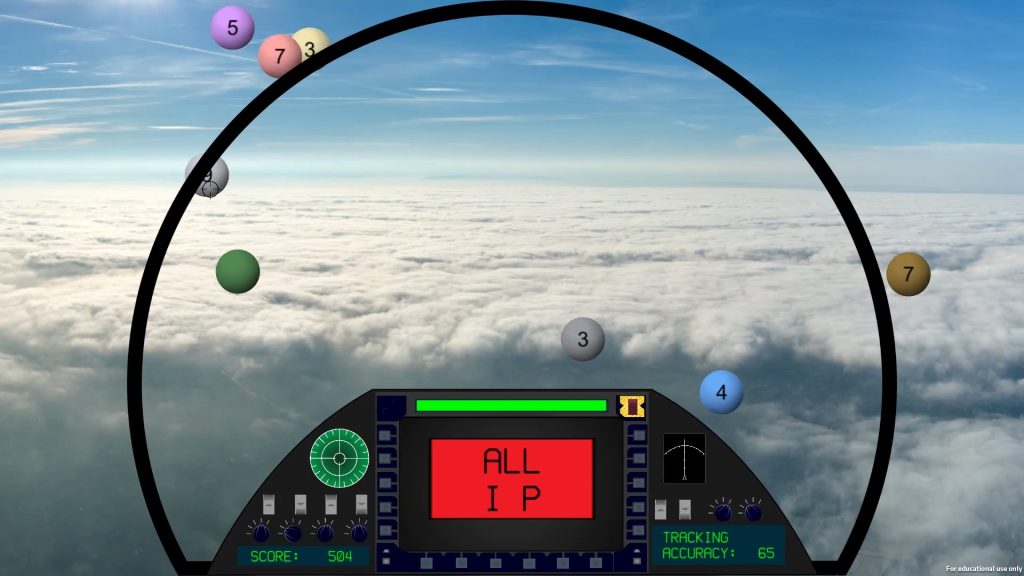
CAAPES has four cognitive tasks
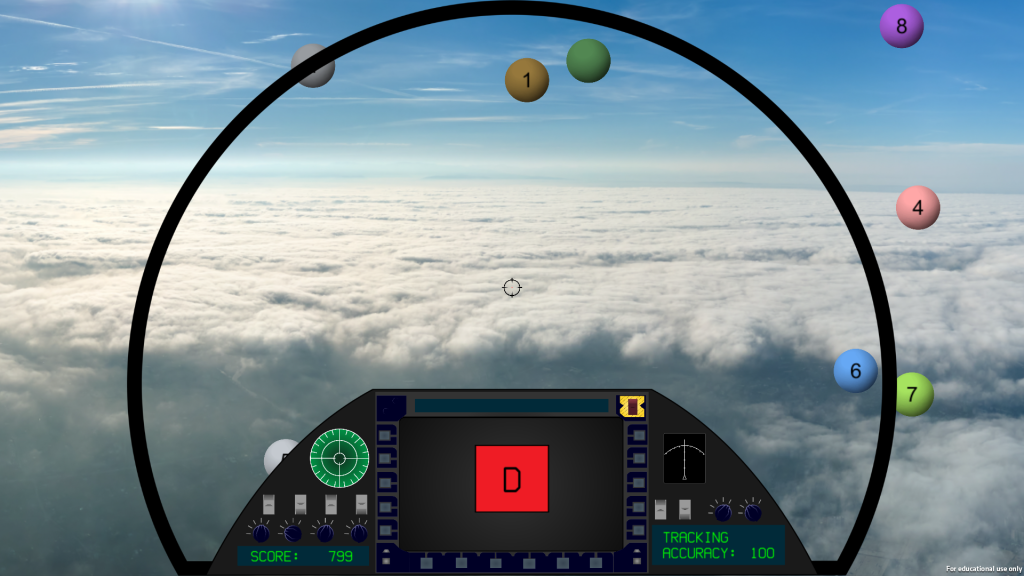
CAAPES is composed of one primary tracking task and three additional subtasks (math, manikin, and memory). Each of these tasks measure different cognitive constructs relevant to aviation. This distribution of tasks is intended to capture the real world aviation multi-tasking prioritization associated with aviate, navigate, and communicate.

Below you will find more information on each individual task and how they each individually apply to aviation relevant multi-tasking prioritization.
Manual Tracking
Tracking is the primary task in CAAPES. This is where the participant uses the joystick to follow a green circle on the screen during the entire session of CAAPES. Tracking is intended to be prioritized by the participant during the entire session as it simulates the aviate task of piloting an aircraft.
Visual Working Memory
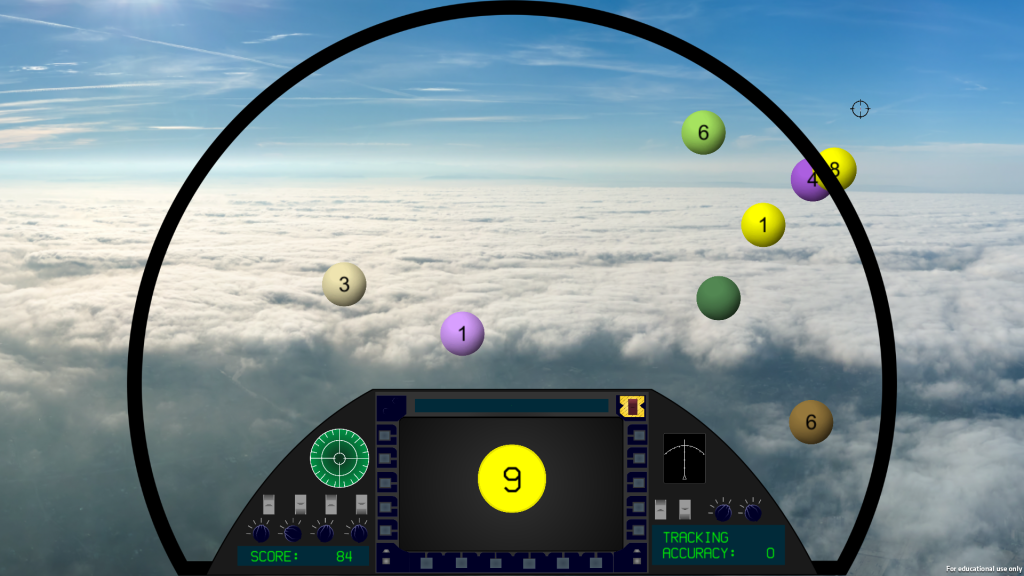
This task is believed to engage visual working memory. Participants must briefly retain the visually presented numbers, process them by adding them together, and then quickly respond.
Math Task
The math task presents a standard addition task. Participants must sum numbers displayed within yellow circles on the screen and verify whether the total matches the number shown in the Multi-Function Display (MFD). As difficulty level increases, the participant will be required to add more numbers together in a shorter amount of time.
Manikin Task
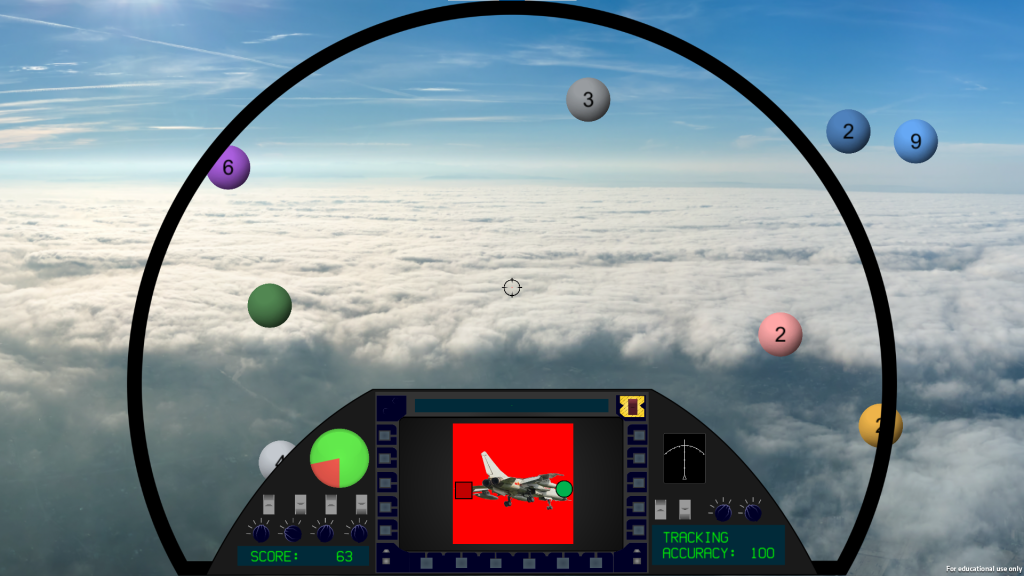
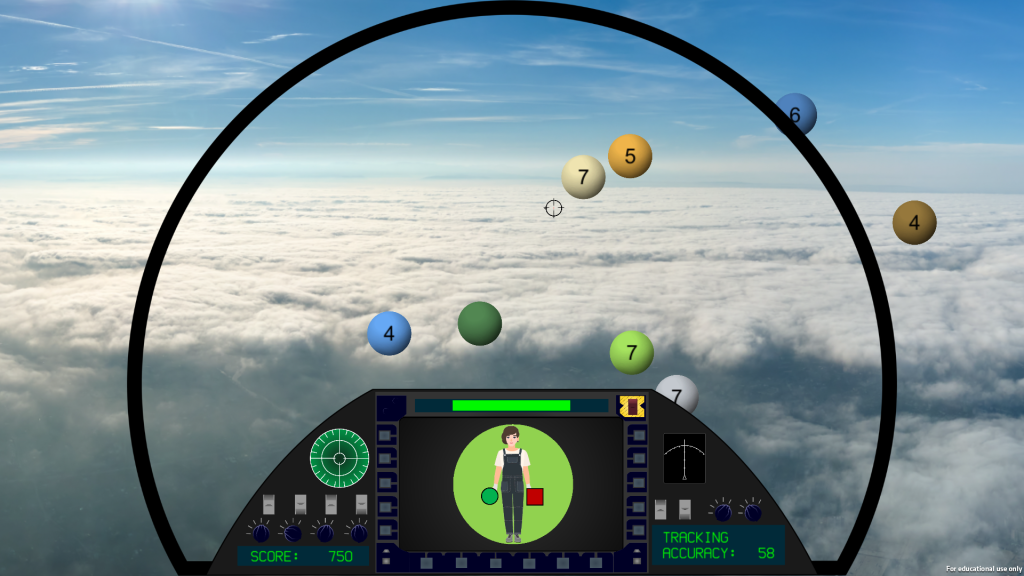
The Manikin task presents an object (being either a humanoid figure or an airplane) in the MFD in various orientations. The participant needs to gauge whether the object appearing on the right hand of the humanoid or right wing of the aircraft figure matches the color of the background in the MFD.
Spatial Apperception
The Manikin task assesses visuospatial processing, which involves evaluating a person’s ability to perceive, analyze, and manipulate visual information in relation to space, including the mental rotation of objects to determine their spatial orientation.
Short Term Memory
Typically, pilots have to take information being communicated to them, keep it in short-term memory, and then apply that information in some way. This memory task is analogous to the cognitive processes utilized while communicating with air traffic controllers in aviation.
Memory Task
The Memory Task requires participants to listen to a sequence of letters and numbers and will be later prompted to recall. During the recall phase, letters and numbers are displayed on the MFD, and participants must indicate whether each item was previously listed. As the difficulty level increases, the number of items to be remembered in each recall prompt also increases.